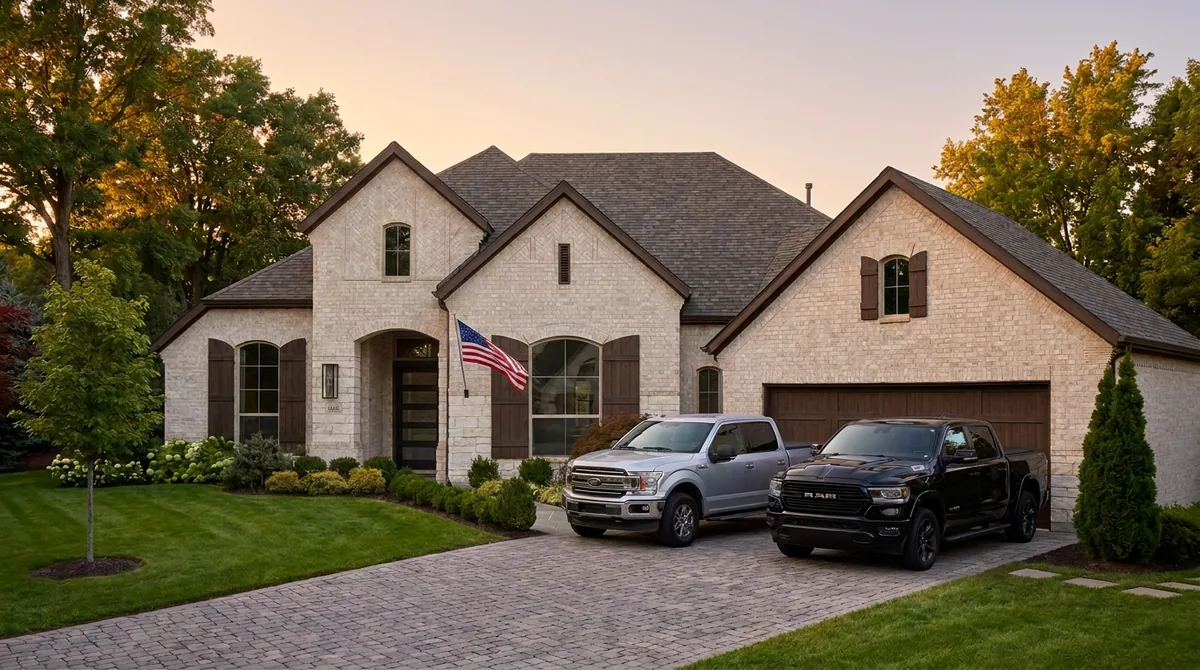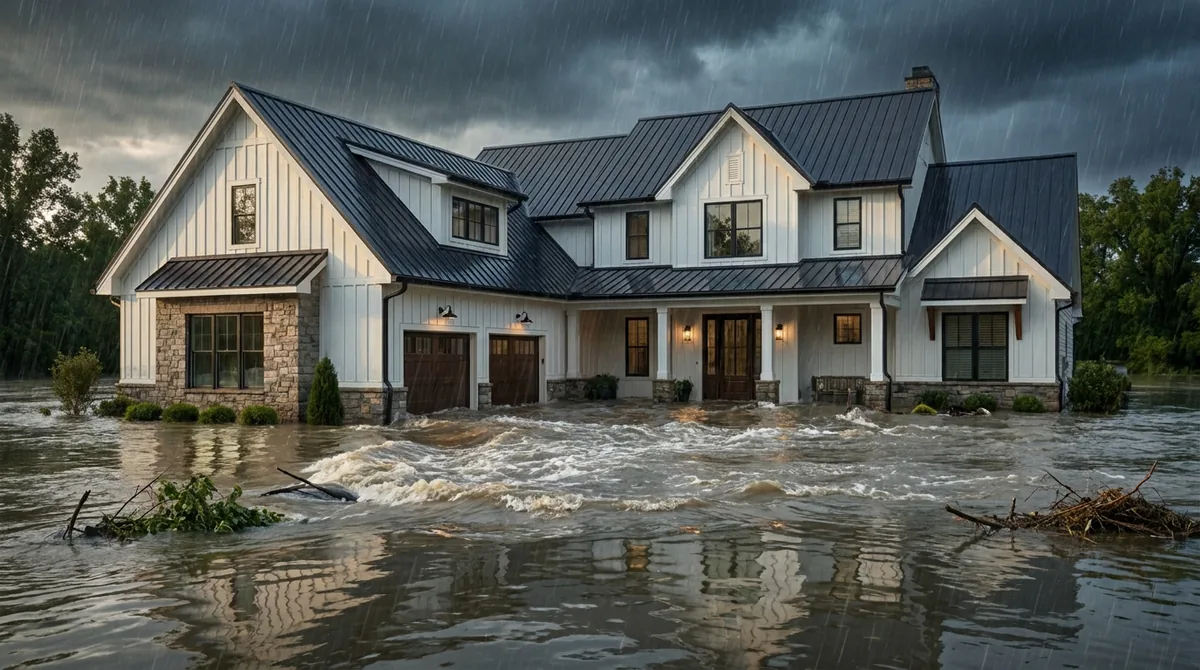
You compare renewals with a friend across town. Similar house, similar age, similar size. Your premium is a lot higher, and nobody can tell you why. In Houston, that conversation is common, and there is usually a real reason hiding in the address.
Houston is a big insurance market to describe in one page. The U.S. Census Bureau estimates 2,397,315 residents as of July 2025, and about 42% of occupied homes are owner-occupied. The Handbook of Texas notes the city reaches into Harris, Fort Bend and Montgomery counties.
This page is specific to the City of Houston. For the region around it, including Galveston and Brazoria counties, start with our Greater Houston and Gulf Coast home insurance guide. If you rent rather than own, our renters insurance page is the better fit.
Why two similar Houston houses can price so differently
The short answer: Carriers price the specific address, so distance to a bayou, local claims history, roof age, rebuild cost and the deductibles on the policy can separate two similar homes by thousands of dollars.
The spread is real, and it is measurable. Rice University's Kinder Institute reported in July 2025 that average annual premiums ran from $5,000 to $9,500 in Harris County's wealthiest neighborhoods and under $2,500 in many lower-income areas.
Some of that gap is home value. Much of the rest comes from what carriers see at each address:
Claims nearby
Hail, wind and water claims in your area feed the rate. A few streets can change the loss history a carrier sees.
Age and material
Roof age decides price, and often whether the roof is settled at replacement cost or actual cash value.
Rebuild cost
Two houses with the same market value can cost very different amounts to rebuild.
Distance to a bayou
FEMA prices flood policies partly on distance to flooding sources and ground elevation, so the flood layer can swing even more.
Texas also allows credit-based insurance scoring on home policies, and prior claims follow the property. FEMA's flood premium page lists the rest of what it weighs, from first-floor height to the building's replacement cost.
What Houston home insurance costs, and why the published averages disagree
The short answer: TDI's statewide average was $3,291 for 2024 and Kinder's Harris County average was about $3,325 for 2023, while rate-comparison sites publish far higher Houston figures because they quote one fixed sample house.
Search "Houston home insurance cost" and you will find numbers that don't agree. In early October 2026, the Houston figures we saw on rate-comparison sites ran from about $6,000 to more than $9,000 a year. That doesn't make them dishonest. They are measuring something different.
| Figure | What it measures |
|---|---|
| TDI statewide: $3,291 (2024) | The average across the Texas homeowners market. TDI shows a preliminary 2025 figure of $3,506. |
| Kinder, Harris County: about $3,325 (2023) | The county average from TDI data. It includes older policies, smaller homes and every kind of coverage form. |
| Rate-comparison sites | Prices for one sample house with a set dwelling limit and deductible, usually from a handful of carriers. |
| Your quote | Your house, your roof, your limits and your claims history. The only number that applies to you. |
TDI's homeowners market overview also publishes average premiums for every county from 2019 to 2025 on an interactive map. If you live on the Fort Bend or Montgomery County side of Houston, that is the best free way to see your own county's trend. Our Texas home insurance cost breakdown shows how the statewide numbers shift by home profile.
Houston is outside TWIA territory, so wind stays on your policy
The short answer: TWIA's designated area covers only the part of Harris County east of Highway 146, and Houston isn't on TDI's list, so Houston homes normally carry wind and hail on the homeowners policy with their own deductible.
The Texas Department of Insurance names the Harris County portion of the designated catastrophe area as La Porte, Morgan's Point, Pasadena, Seabrook and Shoreacres. Houston isn't listed, and Fort Bend and Montgomery counties aren't designated at all.
In plain English: most Houston homeowners don't need a separate windstorm policy. The trade-off is that wind and hail sit inside your homeowners policy, often with a deductible that is a percentage of the dwelling limit. On a $300,000 dwelling limit, a 2% wind and hail deductible is $6,000.
Houston has tested those deductibles twice recently. The National Weather Service's May 2024 climate summary describes the May 16 derecho as a swath of 100-plus mph winds through the Houston metro. Two months later, Beryl produced an 84 mph gust at Hobby Airport, according to the weather service's county impact summary.
If a storm damages your roof, our Texas roof claim walkthrough covers the first 48 hours. To see the deductible math in more detail, read our wind and hail deductible explainer.
The carriers we shop for Houston homes
The short answer: We compare Geico, Progressive, Liberty Mutual and Safeco for the homeowners policy and NFIP and private flood for water, at identical limits, and the best fit depends on the house.
What separates carriers for a Houston home
| What we're weighing | Why it matters in Houston |
|---|---|
| Wind and hail deductible | Flat dollar or percentage. After a derecho or a Beryl, this line decides your out-of-pocket cost. |
| Roof settlement terms | Replacement cost or actual cash value. On an older roof, the difference can be most of a replacement. |
| Water endorsements | Sewer and drain backup, foundation and slab coverage, and how sudden leaks are handled vary by company. |
| Prior claims | Harvey and Beryl claims sit on many Houston addresses. Carriers weigh them differently. |
| Older home appetite | Inner-loop and mid-century homes with original systems are welcome at some carriers and declined at others. |
| Bundling with auto | Often worth pricing here, because wind usually sits on the home policy rather than a separate one. |
Bayou by bayou: what Harvey's numbers mean for your flood decision
The short answer: Harvey flooded homes in every major Houston watershed, mostly outside the 100-year floodplain, and only about 36% of flooded homes had flood insurance, so the flood layer deserves a decision at every Houston address.
The Harris County Flood Control District's June 2018 final Harvey report counted 154,170 flooded homes countywide, and 68% of them were outside the 100-year floodplain. It also broke the damage down by watershed.
| Watershed | Homes flooded in Harvey (HCFCD) |
|---|---|
| Brays Bayou | About 23,810 |
| Buffalo Bayou | About 17,090 |
| Greens Bayou | About 12,900 |
| Sims Bayou | About 6,370 |
Compare the two figures. Most flooded homes were outside the 100-year floodplain, but only about 45% of Houston's insured claims came from moderate or low risk zones. One likely reason is that federally backed mortgages require flood insurance in mapped high-risk zones, and not outside them. The same HCFCD report found only about 36% of flooded Harris County homes had flood insurance.
Homeowners policies exclude flood. Our guide to buying flood coverage outside a high-risk zone covers the decision, and what flood insurance costs in Texas covers the price. You can also price a policy through our flood insurance page.
Chapter 19: the city's post-Harvey building rule
The short answer: Since September 1, 2018, Houston has required new homes in the 100- and 500-year floodplains to be built two feet above the 500-year flood elevation, which matters most when you buy new, build or rebuild after major damage.
After Harvey, Houston City Council rewrote its floodplain ordinance, Chapter 19 of the city code. Houston Public Media reported on April 4, 2018 that council passed the rules 9 to 7, requiring homes in regulated areas to be built at least two feet above the 500-year flood level.
Houston Public Works' Chapter 19 presentation set that standard, the 500-year elevation plus two feet, for new structures in both the 100-year and 500-year floodplains. The city's guideline summary lists an effective date of September 1, 2018, and applies the same standard to substantial improvements in the 100-year floodplain.
What this means for insurance:
- Newer, higher homes. A home built to this standard sits higher, and FEMA counts first-floor height when it prices flood. Keep the elevation certificate.
- Rebuilding after major damage. A substantially damaged home in the 100-year floodplain may have to be raised. NFIP policies include up to $30,000 of Increased Cost of Compliance coverage for that.
- Buying older. Homes built before 2018 weren't held to this rule. Ask for the elevation certificate and flood history before closing.
Clear Lake falls under the same city rules. Our Clear Lake home insurance page covers how they play out near the bay.
The FEMA remap: what the February 2026 drafts do and don't change
The short answer: FEMA released draft Harris County flood maps on February 12, 2026, but drafts can't be used for insurance decisions and no effective date is set, so today's maps still govern your requirements and rates.
The new maps come through Harris County's MAAPnext program, which says the drafts are informational only. Preliminary maps and a formal appeal period come first. Community Impact reported in February 2026 that final approval isn't expected until November 2028.
Two Houston-specific wrinkles:
- Not every Houston address is in Harris County. MAAPnext covers Harris County. Homes on the Fort Bend or Montgomery County side of the city follow those counties' maps.
- Timing can matter. If your home may be mapped into a higher-risk zone, a policy already in force before the change can carry advantages. Ask us how your address might move.
A new NFIP policy generally takes 30 days to start, and Congress has extended the program through December 11, 2026. Our flood zone explainer covers what A, AE and X mean for your policy.
Slabs, slab leaks and sewer backups
The short answer: Standard Texas home policies usually exclude earth movement and continuous leaks, while foundation and slab damage and sewer or drain backup are optional endorsements, so check those lines before you assume a Houston slab problem is covered.
The Texas Department of Insurance homeowners guide lists earthquakes and earth movement among common exclusions. It says most policies cover a sudden and accidental release of water, but not a continuous leak.
TDI also lists two endorsements that matter here: coverage for damage to foundations or slabs, and coverage for backup of sewers or drains. Both are optional, and both vary by carrier.
So the question to ask is what your policy does when water and a slab meet. Our page on sewer backup and sump pump coverage walks through the backup side. If your roof is the bigger worry, read replacement cost versus actual cash value roofs.
When we re-shop coverage for clients, they save on average about $500 a year, and the review often catches a missing endorsement worth more than the savings. Compare options on our home insurance page.
The bottom line
No company is the best home insurance in Houston for every house. A bayou, a roof, a deductible and a claims history can make two similar homes very different risks. Get those right, close the flood gap, and the price comparison becomes much clearer.
We are an independent agency in Friendswood, just south of the city. We shop Geico, Progressive, Liberty Mutual and Safeco for the homeowners policy and NFIP and private flood for water, at identical limits. Neighbors to the south can compare our Pearland home insurance guide, our Pearland flood page and our Friendswood homeowners guide.
Send us your declarations pages and we'll show you the full comparison. (832) 703-1289.
Last reviewed by the Watson Insurance team on October 2, 2026. Carrier appetite, NFIP rules and City of Houston floodplain rules are re-verified before every quote, and this page is refreshed quarterly. Educational only, not personalized insurance advice.