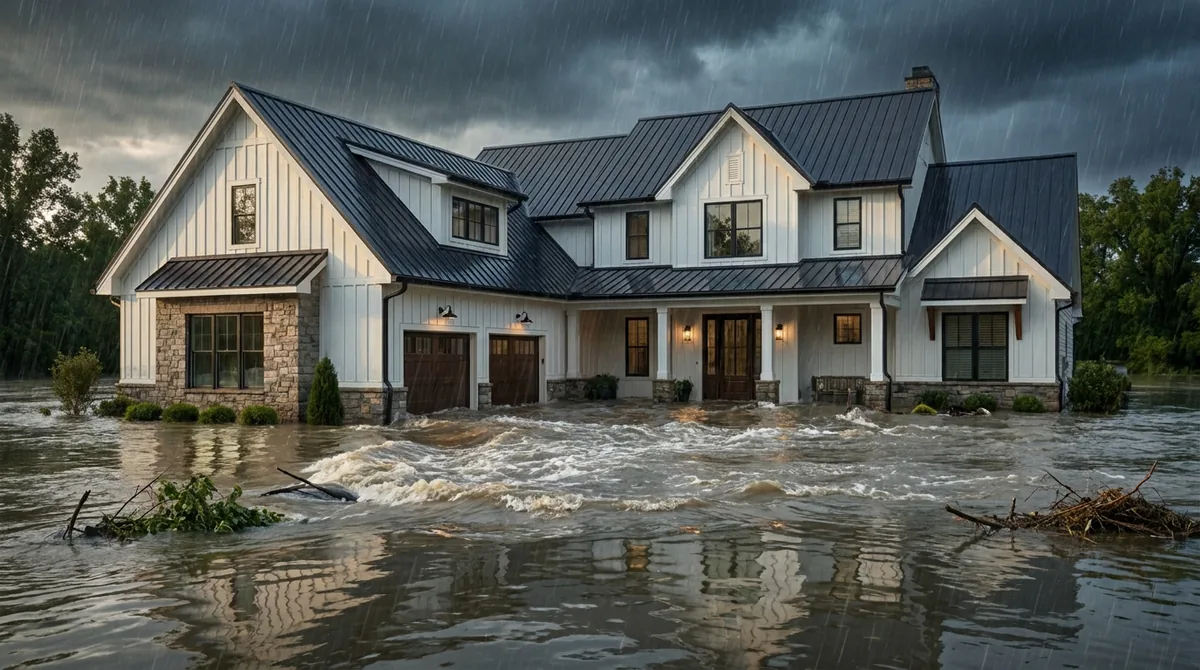
You hear it before you see it: a gurgle in the tub, then water rising out of the shower drain or the downstairs toilet. Maybe it's clear storm water. Maybe it's worse. Either way, your first call to the insurance company can end with a surprise: "That's water backup, and you don't have that coverage."
That conversation is avoidable. We're an independent agency in Friendswood, and we look for this gap on every home policy we review. This guide explains what backup is, how it differs from a leak and a flood, and the inexpensive fix. For the bigger picture on Houston-area home coverage, see our Gulf Coast home insurance overview.
Why sewer backup falls through the cracks
The short answer: Texas home policies exclude flood, and they usually treat water backing up through sewers or drains as an add-on, so a backup can be missed by both your homeowners policy and your flood policy.
The Texas Department of Insurance homeowners guide, updated June 2026, lists flooding among the things most policies don't cover. In its list of extra coverages you can add by endorsement, it includes "backup of sewers or drains."
In plain English: unless you added it, assume your home policy doesn't pay for water that comes up through a drain.
Flood insurance doesn't automatically fill that gap. It pays only when the backup is caused by an actual flood, as we explain below. That leaves an ordinary backup, from a blocked line or an overloaded sewer during a storm that doesn't meet the flood definition, belonging to neither policy unless you bought the endorsement.
Four kinds of water damage, four different answers
The short answer: A sudden plumbing leak is usually covered, a slow leak or seepage usually isn't, water backup needs an endorsement, and flood needs a separate flood policy, so the source of the water decides the claim.
| Where the water came from | Usually paid by | What to know |
|---|---|---|
| Sudden plumbing failure (burst pipe, broken washer hose, toilet overflow) | Homeowners or renters policy | TDI says most policies cover sudden and accidental water damage. |
| Slow leak or seepage | Usually no one | TDI says most home policies don't cover gradual leaks or seepage, including resulting mold. |
| Backup through a sewer or drain | Backup endorsement on the home policy | TDI lists it as an extra coverage. Limits are chosen separately. |
| Rising water from outside (flood) | NFIP or private flood policy | Home policies exclude flood. A flood policy can pay for a backup the flood caused. |
TDI's guidance on when water damage and mold are covered draws the line at "sudden and accidental." A pipe that bursts on Tuesday is a claim. A drip that rotted the subfloor over a year usually isn't.
Backup sits in its own category because the water didn't come from your pipes failing. It came from the sewer pushing back.
When flood insurance pays for a backup
The short answer: An NFIP flood policy covers sewer or drain backup only when there is a flood in the area and that flood is the direct cause, so a backup from a clog or a local sewer problem isn't a flood claim.
FEMA's FloodSmart site puts it simply: a flood policy would cover water damage from a sewer that backed up during a heavy rainstorm, but not damage from a sewer backup caused by clogged pipes.
The policy language is stricter than that sounds. FEMA's training on the standard flood policy explains that backup through sewers or drains, and discharge or overflow from a sump pump, are excluded "unless there is a flood in the area and the flood is the proximate cause."
And "flood" has a definition. FEMA describes it as two or more properties or acres of normally dry land partially or completely covered by water. A backup in one house on a dry street doesn't qualify.
When a real flood reaches your street, one event can touch both sides. Water that came in under the door is flood. Water that came up through the drains at the same moment is usually flood too, because the flood caused it. Adjusters sort that out much the way they split wind from water after a hurricane, as our guide to how wind and flood claims are split explains.
Some pages online say flood insurance never covers sewer backup. FEMA's own wording says otherwise, which is why we pair the backup endorsement with a flood policy rather than treating them as substitutes. Our guide to flood coverage outside high-risk zones covers the flood half.
How the water backup endorsement usually works
The short answer: The backup endorsement adds a separate dollar limit for water that comes up through drains or sewers, and the questions that matter are the limit, the deductible, and whether it names sump pump overflow.
The Insurance Information Institute says backup coverage is available from most providers for a nominal cost. Carriers write it differently, so we compare the wording, not just the price. These are the five questions we ask on every quote:
What's the limit?
Backup coverage usually carries its own dollar limit, separate from your dwelling limit. Pick one that covers flooring, drywall and cleanup on your lowest floor.
Is there a separate deductible?
Some endorsements use your regular deductible. Others set their own. Know the number before you need it.
Does it name sump pumps?
If the endorsement doesn't mention sump discharge or overflow, don't assume it's included.
What about flood?
Ask how it treats a backup that happens during a flood. That's usually the flood policy's job.
The fifth question is about belongings. Ask whether the limit covers your contents as well as the structure, and how it settles them. Two quotes with similar prices can treat a backup very differently, which is the point of our coverage-first approach to comparing quotes.
Sump pumps in slab-foundation country
The short answer: Fewer Gulf Coast homes have basements, but sump pumps still protect garages, crawl spaces and yard drains here, and their overflow is excluded from flood coverage unless a flood caused it.
Slab foundations are common around Friendswood. Sump pumps still show up in raised homes, low garages, pool equipment pits and yard drainage systems. When the pump fails or the power goes out mid-storm, water rises where it was supposed to be pumped away.
Two rules shape the claim. FEMA's flood policy excludes sump discharge or overflow unless a flood in the area caused it. And your home policy will only pay if your backup endorsement names sump overflow.
If you have a sump pump, a battery backup keeps it running when the power goes out. On the Gulf Coast, where storms and outages travel together, that matters.
Who owns the sewer line: you or the city
The short answer: In Houston, the private sewer lateral from your house to the city main is the homeowner's responsibility, and a quick look at your cleanout tells you whether a backup started on your side or the city's.
The City of Houston Public Works wastewater FAQ says the private lateral, the pipe connecting your house to the city's main, is on your property and is yours to service and maintain. The city maintains the public main lines.
Houston also gives homeowners a simple test:
- Cleanout is dry: if your home is backing up and the cleanout near the property line is dry, the city says the stoppage is in your home's plumbing and the fix is yours.
- Cleanout is holding water or overflowing: the stoppage may be in the public sewer. The city asks residents to call 311.
Other cities in our area set their own rules, so check with your public works department if you're outside Houston. Either way, a backup endorsement pays for water damage inside the house. It generally doesn't pay to dig up and replace a broken lateral, which some carriers cover through a separate service line endorsement.
If you're shopping a Houston home now, our Houston home insurance comparison covers the rest of the policy.
Prevention that also strengthens a claim
The short answer: Keep grease and wipes out of the drains, cut back tree roots near the sewer line, and ask a licensed plumber about a backwater valve and a battery backup sump pump.
Houston Public Works says 70% of sewer overflows in Houston are caused by clogs from fats, oils and grease poured down the drain and wipes flushed down toilets, and that the city sees hundreds of sewer overflows each year. That's prevention that costs almost nothing: wipe the pan into the trash, and flush only toilet paper and waste.
- Install a backwater valve. FEMA recommends having a plumber install a backflow valve to push water and sewage away from your home. The III describes it as a valve that lets sewage out and blocks it from coming back in.
- Watch the trees. The III notes that small roots work into sewer line cracks and joints and expand as they grow.
- Keep storm water out of the sanitary line. The III lists French drains and sump pumps connected to the sanitary sewer among illegal connections worth correcting.
After a backup: the first 24 hours
The short answer: Stop the water if you can, keep people away from sewage, photograph everything before cleanup, start drying quickly, and report the claim promptly, because TDI says mold can start within a day.
TDI's water damage guidance lays out the steps: stop the flow, remove standing water and start drying, document the damage with photos before repairs, and keep receipts for temporary repairs. TDI also warns that your insurer may deny a claim if you don't protect your property from further damage.
On mold, TDI says mold on an item damaged by a covered loss is covered, but policies typically exclude mold cleanup and testing beyond that unless you add coverage. Our Texas roof claim guide walks through documenting and filing a claim step by step.
Worried a claim will count against you? Under Texas Insurance Code §551.107, an insurer generally can't non-renew a home policy over claims unless there are three or more claims in three years, not counting claims from natural causes, with a warning after the second. In plain English: one backup claim alone isn't grounds for non-renewal. Our non-renewal guide explains the rule.
The bottom line
Water backup is one of the easiest gaps in a Texas home policy to close and one of the most frustrating to discover after the fact. It isn't a plumbing leak, and it usually isn't flood. It's its own coverage, and you only have it if someone added it.
When we compare home quotes, we price the backup endorsement alongside the rest, and we look at whether your flood policy and backup coverage fit together. If you're in a flood-prone part of town, our guides to Pearland flood insurance and NFIP versus private flood cover the other half, and our home insurance page is the place to start a quote.
Send us your declarations page and we'll tell you, in plain English, which water you're covered for. (832) 703-1289.
Last reviewed by the Watson Insurance team on October 2, 2026. TDI, FEMA and City of Houston guidance is re-verified before every update; endorsement wording varies by carrier. Educational only, not personalized insurance advice.