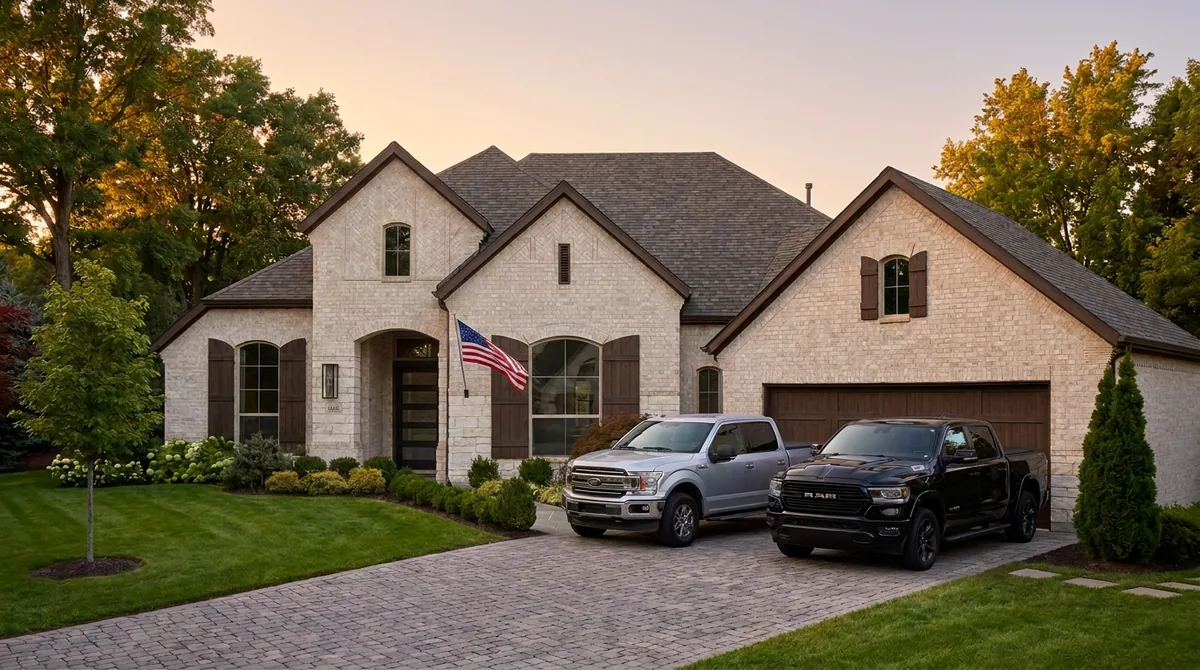
If you've just bought a house in League City or Galveston and someone handed you three separate policies, you're not being upsold — you're being underwritten the way the coast actually works. Wind, water and everything else are frequently three different contracts down here, and the wind one is the piece most people understand least. This guide is about that piece: who writes wind in designated coastal Texas, why the state pool makes you get turned down before it will take you, what the certificate holding up your closing actually is, and how to tell whether TWIA or a private wind carrier is the better answer for your address. We're an independent agency in Friendswood — Galveston County, inside the designated area — so this is the conversation we have most weeks.
Who actually insures wind on the Texas coast?
The short answer: Usually not the company on your homeowners policy. Inside the designated catastrophe area, most home policies exclude windstorm and hail, and the wind gets written separately — by TWIA or by a private wind carrier.
Away from the coast, one homeowners policy handles hail, wind, fire and theft together. Inside the designated area, the market splits that apart. Your homeowners policy becomes a "wraparound" — it covers fire, theft, liability and the rest, with wind and hail carved out — and a second policy picks up the wind. On the island, that wind policy can come with a flood requirement too, which our Galveston flood insurance guide explains, and our Galveston County home insurance comparison shows how the whole stack fits.
That structure catches people off guard in two directions. Some assume their homeowners policy covers hurricane wind because it's a "hurricane policy" in their head. Others carry a wind policy and assume it covers everything a home policy would. Neither is true, and the gap only reveals itself during a claim.
Wraparound homeowners
Fire, theft, liability, water damage from a burst pipe — everything except the excluded wind and hail. Written by a standard carrier.
Wind & hail
TWIA or a private wind carrier. Covers windstorm and hail damage to the structure and contents, and nothing else.
Flood
NFIP or private flood. Rising water is excluded from both policies above — see our Texas flood insurance guide.
Where claims fight
Wind opened the roof, then rain came in, then the street flooded. Three policies, one house, one very complicated adjustment.
The practical takeaway: on the coast, "am I covered for a hurricane?" isn't one question. It's three, and they have three different answers — which is the whole subject of our Texas hurricane insurance and preparedness guide. The job of an independent agency here is making sure the three fit together without a gap between them — which is genuinely harder than selling any one of them.
Am I in the designated catastrophe area?
The short answer: If you're in one of 14 first-tier coastal counties — or in Harris County east of Highway 146 — yes. That line is drawn by the Commissioner of Insurance, not by how close you feel to the water.
Per TWIA's eligibility requirements, the designated area currently includes all fourteen first-tier coastal counties: Aransas, Brazoria, Calhoun, Cameron, Chambers, Galveston, Jefferson, Kenedy, Kleberg, Matagorda, Nueces, Refugio, San Patricio and Willacy — plus the portion of Harris County east of Highway 146.
Two things about that list matter locally. Galveston, Texas City, Dickinson and Kemah are in Galveston County, and Alvin is in Brazoria County. Both counties are on the list in full, so a house nowhere near a beach can still sit in designated windstorm territory. Several of our biggest suburbs straddle county lines, though: parts of Friendswood and League City are in Harris County, and Pearland reaches into Harris and Fort Bend counties, so those sides generally fall outside the territory. Our county-by-county Gulf Coast guide maps it out.
Harris County is the one that surprises people, because only the slice east of Highway 146 qualifies. Two houses a few minutes apart on either side of that highway can be in genuinely different insurance markets. In Friendswood the county line runs right through town along Clear Creek — we cover what that does to a local policy in our Friendswood home insurance guide. If you're anywhere near that line, don't guess from a map on the internet — TDI publishes county-level maps, and we'll check the specific address before quoting anything.
Why does TWIA make you get turned down first?
The short answer: Because it's the insurer of last resort by statute, not a carrier competing for your business. Eligibility requires that an authorized insurer actively writing wind and hail in the designated area has declined you.
This surprises almost everyone. TWIA isn't a company you shop against the private market — it's the residual market that exists so coastal property remains insurable when private carriers won't write it. TWIA's own eligibility rules, set by the Legislature under Texas Insurance Code Chapter 2210, require that applicants "have been denied coverage by at least one authorized insurer actively writing or renewing windstorm and hail coverage in the designated area."
In plain English: somebody has to say no before TWIA can say yes. That's not a hoop your agent invented — and it's the reason a good independent agency shops the private wind market first. If a private carrier will write your house, that's often the better policy anyway, and the search is a required step regardless.
The rest of the eligibility gate
A denial alone isn't enough. TWIA also requires:
- Windstorm certification — WPI-8 or WPI-8-E from TDI, or WPI-8-C from TWIA, with limited exceptions. More on this below.
- Proof of flood insurance in the riskiest zones. Property in flood zones V, VE or V1-30 that was constructed, altered, remodeled or enlarged on or after September 1, 2009, and that can obtain NFIP coverage, must show proof of flood insurance to get wind coverage. This is the one place where the flood and wind policies formally depend on each other.
- Insurable condition. In good repair, no unrepaired damage, no hazardous conditions.
And TWIA checks. It inspects properties as part of underwriting — sometimes physically through a vendor, sometimes remotely using high-quality aerial imagery and risk reports — and policies can be re-evaluated at any time for continued compliance. That last part is worth internalizing: an unrepaired roof after a hail season isn't just a claims problem, it's an eligibility problem.
What is a WPI-8, and why is it holding up my closing?
The short answer: It's the certificate proving a structure was built or repaired to the applicable windstorm building code. Without one, TWIA generally can't insure the property — which means a coastal sale can stall on a piece of paper.
There are three flavors, and knowing which one you need saves real time:
| Certificate | Issued by | Typically used for |
|---|---|---|
| WPI-8 | Texas Department of Insurance | New construction or additions inspected by a TDI-appointed engineer |
| WPI-8-E | Texas Department of Insurance | Certification based on an engineer's evaluation of existing construction |
| WPI-8-C | TWIA | Certain repairs and alterations accepted directly by the Association |
The pattern that causes trouble is renovation. Replace a roof, add a room, or enlarge a structure in the designated area without getting the work certified, and the property can lose the paperwork trail it needs for wind coverage. The fix after the fact is an engineer's evaluation, which costs more and takes longer than certifying the work when it was done. If you're planning coastal work, the certificate conversation belongs at the contractor stage, not the closing stage.
There's an upside worth naming too. TWIA gives premium credits for items certified as built to recent windstorm building codes. Wind mitigation isn't just an eligibility box — properly documented, it lowers the bill. That's one of the few places on the coast where spending money on the house reliably reduces the premium.
What a TWIA policy covers — and the four things it doesn't
The short answer: Windstorm and hail damage, and by law nothing else. Not fire, not theft, not flood, and no liability.
TWIA is unusually blunt about its own scope, and we'll quote the shape of it plainly: TWIA policies cover only windstorm and hail damage to the property covered, no other perils are covered by law, and they do not cover flood.
Wind & hail
Coverage A is the structure; Coverage B is personal property. Residential, commercial, and manufactured homes are all eligible categories.
Miscellaneous items
Signs, fences, swimming pools and flagpoles can be covered — but they have to be scheduled, not assumed.
Every other peril
Fire, theft, lightning, burst pipes. That's what the wraparound homeowners policy is for — and why letting it lapse is dangerous.
Flood & liability
Rising water needs NFIP or private flood, and there's no liability coverage here at all. Hail on your vehicles is a third thing again — that's comprehensive on the auto policy.
The coinsurance requirement nobody reads
TWIA's declarations page carries a coinsurance requirement — the amount of coverage you must carry relative to your home's value. It's stated on the dec page, and the value it's measured against is replacement value (what it would cost to rebuild) or cash value (replacement minus depreciation), not market value.
This is the quiet one. Insure a house for comfortably less than it would cost to rebuild and you can end up sharing a partial loss with the insurer even when the loss is far below your limit. Rebuild costs on the coast have moved a great deal in five years. If nobody has revisited your Coverage A since you bought the house, that number deserves a look — the same rebuild-cost-versus-market-value logic we walk through in the Texas home insurance guide — it's the most common coastal under-insurance we find, and it's invisible until a claim.
How do TWIA deductibles actually work?
The short answer: As a percentage of your dwelling limit rather than a flat dollar amount — and TWIA says plainly that the deductible you choose has the biggest single impact on what you pay.
This is the mechanic that produces the most shocked phone calls after a storm, because a percentage deductible on a coastal policy is a much larger number than the $1,000 people carry inland. Our wind and hail deductible guide covers the statewide mechanics — triggers, roof fine print and all; below is the TWIA-specific arithmetic.
Run the arithmetic on a $400,000 dwelling limit:
| Deductible | On a $400,000 dwelling limit | What that means in practice |
|---|---|---|
| 1% | $4,000 | Lowest out-of-pocket, highest premium |
| 2% | $8,000 | A common middle ground |
| 5% | $20,000 | Lowest premium — and a number you must actually have available |
The rule we give clients is simple and unglamorous. Choose the deductible you could write a check for during the worst week of your life — not the one that makes the quote look best. After a hurricane, contractors want deposits, hotels want cards, and your deductible comes out of your own pocket before any claim money moves. A 5% deductible that saves a few hundred dollars a year is a good trade only if $20,000 is genuinely available to you.
Two other things reliably lower the premium without shrinking the coverage: documented wind mitigation credits for code-certified construction, and simply making sure your Coverage A is accurate rather than inflated. TWIA also does not use credit scoring or territorial rating, which is a real difference from the voluntary market — where credit-based insurance scores are permitted in Texas and do affect what you pay.
What does windstorm coverage cost — and why hasn't the price moved?
The short answer: The average TWIA residential premium is about $2,541 (as of June 30, 2026). Rates haven't risen since the 2022 filing — and the story of why is the most useful thing on this page.
TWIA publishes its rate history, and read as a sequence it tells you something no marketing page will.
| Filing year | Residential rate change | What happened |
|---|---|---|
| 2015 – 2018 | +5%, +5%, 0%, +5% | Three increases in four years |
| 2019 | 0% | TWIA filed for 10%. The Governor suspended TDI's consideration; TWIA withdrew the filing. |
| 2020 | 0% | No change filed |
| 2021 | 0% | TWIA filed for 5%. TDI rejected the filing on procedural grounds. |
| 2022 | +5% | The most recent increase to take effect |
| 2023 | 0% | No change |
| 2024 | 0% | TWIA filed for 10%. TDI disapproved it. |
| 2025 | 0% | No change filed |
Three separate attempts to raise rates were stopped — once by the Governor's office and twice by the Department of Insurance. Whatever you think of that, it's the mechanism that has kept coastal wind premiums flatter than coastal risk.
And then the math changed
For years TWIA's own actuaries said its rates were too low. The 2025 analysis found rates inadequate by 3% residential and 5% commercial. One year later, the 2026 Rate Adequacy Analysis flipped the sign: rates are now adequate by 9% for residential and 4% for commercial.
That reversal wasn't a change in the weather. TWIA attributes it to legislation passed in 2025 that reduced the minimum catastrophe funding the Association must maintain — lowering its reinsurance costs — plus an exemption from certain taxes.
So on August 4, 2026, the TWIA Board voted unanimously to file a 0% rate change for 2027 policies, due at TDI by the August 15 statutory deadline. For the first time in a long while, holding rates flat is what the actuarial analysis supports rather than something it argues against.
One caution, since we'd rather you hear it from us. Flat rates are pleasant and they are not the same as cheap risk. TWIA's funding is finite, and Texas law allows the Association to assess member insurers after a large enough storm — costs that ultimately circulate back through the coastal market. Flat premiums today are a policy choice, not a guarantee about tomorrow.
TWIA or private wind — which should I actually have?
The short answer: Shop private first, because you have to be declined before TWIA will write you anyway. Private wind often wins on breadth and service; TWIA wins on availability and on not being able to drop you for being coastal.
Because being independent means we place both, we don't have a house answer here. We have a comparison.
| What you're comparing | TWIA | Private wind market |
|---|---|---|
| Who can get it | Last resort Requires a prior denial | Underwritten — they can simply decline you |
| Perils covered | Wind and hail only, by law | Wind and hail; sometimes bundled with the home policy |
| Liability included? | No | Sometimes, when written as a full package |
| Coverage limits | Capped Maximum limits set annually | Higher Often well above the pool's cap |
| Number of policies you juggle | Two or three separate contracts | Sometimes one, which closes seams |
| Credit scoring used? | No | Permitted in Texas and commonly used |
| Can it walk away? | Stable The residual market exists to stay | Yes Appetite shifts after big storm years |
Two moving parts worth knowing about
Maximum limits are being adjusted. TWIA caps how much dwelling coverage a policy can carry, and the cap is revisited annually — at that same August 4, 2026 meeting the Board directed staff to file with TDI for changes to the maximum liability limits. We're deliberately not printing a figure here that's mid-filing. If your home is near the top of the range, that number is worth confirming at quote time rather than reading anywhere online.
You may get an offer to leave. Through TWIA's depopulation and assumption program, private insurers periodically make offers on blocks of TWIA policies. Getting one isn't a trick, and it isn't automatically a good deal either — the right response is to compare the offered form against what you have, not to assume that private is upgrade or downgrade. That's a fifteen-minute conversation and exactly what we're for.
Two deadlines on your calendar right now
The short answer: Your dwelling limit rose automatically on September 1, and TWIA stops writing coverage entirely once a storm is threatening. One of those you can plan around; the other you can only beat.
1. The September 1, 2026 automatic increase
TWIA's Automatic Adjusted Building Cost endorsement — the inflation guard — has been adjusted, and the change is now in force. Residential policies renewing on or after September 1, 2026 get an automatic increase in the dwelling coverage amount of about 3%. Last year's adjustment, for renewals on or after November 1, 2025, was about 1%.
This is mostly good news: it's the mechanism that stops your coverage from quietly falling behind rebuild costs. But it does two things worth expecting. Your premium moves with the limit, because coverages rated off the dwelling amount move too. And because your deductible is a percentage of that limit, a 3% larger limit is also a 3% larger deductible. If your renewal looks different this fall, that's why.
2. The moratorium — the one that actually costs people money
When a storm threatens the Texas coast, TWIA implements a policy moratorium: it temporarily stops issuing new policies and stops increasing coverage on existing ones. Once that window closes, it's closed — you cannot buy wind coverage, and you cannot raise a limit you now realize is too low, while a named storm is approaching.
Every hurricane season we take calls from people watching a cone on the news, and there is nothing we can do for them. The only version of this that works is boring: get the coverage reviewed in the spring, before anything has a name. If you're reading this in the middle of hurricane season and you've been meaning to check your limits, today is materially better than next week.
The bottom line
Coastal Texas asks more of homeowners than the rest of the state, and it does it quietly. Wind is often a separate policy. The state pool won't take you until a private carrier turns you down. A certificate you've never heard of can hold up a closing. Your deductible is a percentage, which makes it a five-figure decision. And the one week you most want to fix all of this is the exact week nobody is allowed to sell it to you.
The genuinely encouraging part: windstorm rates have been flat since the 2022 filing, and for the first time in years TWIA's own actuaries say the current rates are more than adequate — 9% adequate on the residential side. That's a reasonable moment to review coverage rather than avoid it, because the review is about limits and seams more than price.
We're an independent brokerage in Friendswood, inside the designated area ourselves. We shop the private wind markets we're appointed with, we write TWIA coverage, and we place the flood policy that neither one covers. That means we can tell you which structure actually fits your house instead of defending one company's answer — and we can look at the seams between the three policies, which is where coastal claims are really won or lost. Our guide to how wind and flood damage get split after a hurricane walks through those seams.
Bring us your declarations pages — all of them. The most common thing we find isn't an overpriced policy. It's a dwelling limit set years ago and a deductible nobody ever converted into dollars.
Last reviewed by the Watson Insurance team on August 24, 2026. This guide is educational and is not personalized insurance advice — the coverage that fits your address takes a conversation. TWIA rates, eligibility rules, maximum limits and endorsement factors change annually, and we refresh this guide quarterly.