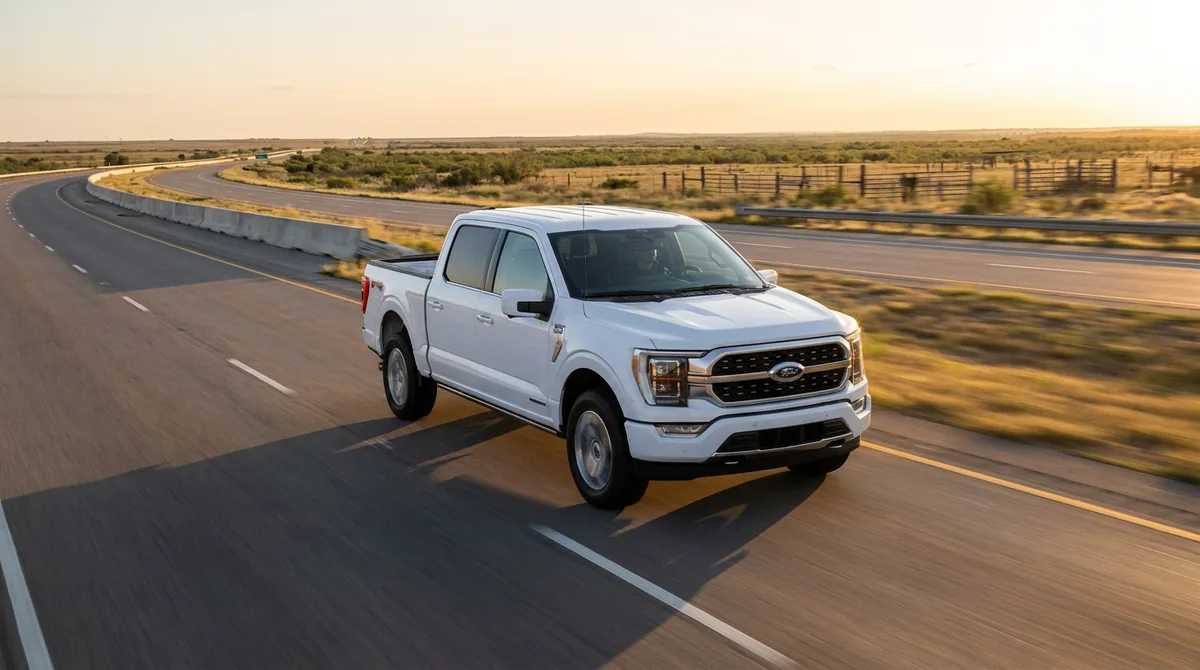
A high-risk driver, in Texas car insurance terms, is someone an insurer expects to file more or bigger claims, usually because of a DWI, several tickets, at-fault crashes, a gap in coverage or very little driving experience. High-risk drivers can still buy coverage in Texas: through standard companies that accept some violations, through nonstandard insurers, and, if two companies turn you down, through the state's assigned-risk plan, TAIPA.
If you've just opened a renewal notice that made your stomach drop, or a company told you no, take a breath. You have more options than it feels like right now, and most records improve with time. This guide explains who insurers treat as high-risk, how they price it, where coverage comes from when the usual doors close and how to work your way back to standard rates. For the bigger picture of Texas auto coverage, start with our complete Texas auto insurance guide.
Who counts as a high-risk driver in Texas?
The short answer: Texas has no single legal definition of a high-risk driver; each insurer decides from its own underwriting rules, and a DWI, repeated tickets, at-fault crashes, a coverage lapse or youth are the usual triggers.
The Texas Department of Insurance explains in its underwriting guide (updated April 1, 2026) that most companies look at your driving record and claims history, and that "some companies might refuse to sell you a policy if you've had certain accidents or gotten some tickets." In plain English: "high-risk" is a label a company puts on you, and a different company may read the same record differently.
The profiles we see most often:
- A DWI or other intoxication conviction. This is the one Texas law singles out for a surcharge (more below).
- Several moving violations. One ticket rarely changes much; a cluster of them can.
- At-fault crashes, especially more than one in a few years.
- A lapse in coverage, or driving without insurance.
- Young or newly licensed drivers, who have little record for an insurer to judge.
- A suspended license or an SR-22 requirement, which tells the company the state is already watching.
One reassurance from TDI's auto insurance FAQ (updated February 26, 2026): "Companies probably won't drop you after the first wreck." It's the pattern, not the single bad day, that usually moves you into a different market.
How do Texas insurers price a high-risk driver?
The short answer: Each Texas insurer applies its own filed rating rules to your driving record, claims history, age, vehicle, ZIP code and credit-based score, so the same high-risk record can be priced very differently from one company to the next.
TDI's auto insurance guide (updated December 11, 2025) puts it simply: "Insurance companies will charge you more if you've had accidents or gotten tickets." It also lists limits. A company may not turn you down or charge more because of your age, gender, marital status, location or disability "unless the company can show that you're a greater risk for a loss than other people it's willing to insure," and it can't refuse you based only on credit.
Tickets are where Texas gets unusual. Insurance Code §1953.051 bars most insurers from attaching a rate consequence to a rules-of-the-road ticket, but county mutual insurers are exempt, and many Texas auto policies are written through them. Our guide to car insurance after a speeding ticket walks through that rule. TDI's own September 14, 2026 memo to the Governor notes that "only county mutual insurers are allowed to assign a rate consequence for moving violations" and recommends changing the statute so all carriers can. As of this writing, that's a recommendation for the Legislature, not a rule.
One more piece of good news for anyone who's been a loyal customer: TDI's September 2, 2026 guidance (Bulletin B-0007-26) says using factors other than insurance risk to set auto rates, such as charging long-term customers more because they're less likely to shop, is unfairly discriminatory under Texas law.
How does a DWI affect car insurance in Texas?
The short answer: A DWI is the one Texas violation where the law requires a surcharge: Insurance Code §1953.052 has insurers assess one for up to three years after the conviction, and Texas DPS also lists DWI among the convictions that call for an SR-22.
Section 1953.052 requires an insurer to assess a premium surcharge, in the amount stated in its own rating plan, for up to three years after a conviction under Penal Code §49.04 (driving while intoxicated), §49.07 (intoxication assault) or §49.08 (intoxication manslaughter). If another conviction comes during that window, the surcharge period stretches by three more years for each one. The section was last amended in 2017 (SB 1490).
In plain English: the law sets the length, but each company sets the size. That's exactly why comparing companies matters so much after a DWI. The Texas Department of Public Safety's SR-22 FAQ (dated November 18, 2020) also lists driving while intoxicated among the convictions that require an SR-22, so the insurance side and the license side usually arrive together.
What is nonstandard car insurance?
The short answer: Nonstandard car insurance is coverage from companies, or divisions of larger companies, that choose to write drivers with tougher records, and in Texas it usually sits between a standard policy and the TAIPA assigned-risk plan.
The Insurance Information Institute's page on finding auto coverage (viewed November 7, 2026) describes insurers that write "non-standard" policies for people with bad accident records or high-performance cars, and notes that they "may be able to sell you more comprehensive coverage than is available through assigned risk pools." Some large brands grew up in this market. Progressive, for one, says on its own site that it began as a specialty underwriter of nonstandard auto in 1956.
| Question | Standard market | Nonstandard market | TAIPA (assigned risk) |
|---|---|---|---|
| Who it's for | Drivers the company is happy to insure on its regular rates | Drivers with violations, crashes, lapses or SR-22s that a company chooses to accept | Drivers turned down by at least two companies in the past 60 days |
| Liability limits | Your choice | Usually your choice; ask | Texas minimum only, 30/60/25 (TAIPA) |
| Collision and comprehensive | Available | Often available | Not sold (TDI) |
| PIP and UM/UIM | Included unless rejected in writing | Included unless rejected in writing | $2,500 PIP and UM/UIM at 30/60/25 offered (TAIPA) |
| Price | Set by each company's filed rates | Set by each company's filed rates, typically higher | TDI says it costs more than coverage from other companies |
The practical takeaway: if a standard company turns you down or quotes a number you can't carry, the nonstandard market is usually the next stop, not TAIPA. You keep the ability to buy higher limits and physical damage coverage for a financed car.
What is TAIPA, and when do you need it?
The short answer: TAIPA, the Texas Automobile Insurance Plan Association, is the state's insurer of last resort for auto liability, open to drivers turned down by at least two insurance companies in the past 60 days, and it sells only minimum-limit liability, PIP and UM/UIM.
TDI's insurers of last resort page (updated October 6, 2025) says you can get TAIPA coverage "if you've been turned down for auto liability coverage by at least two insurance companies in the past 60 days." An insurance agent submits the application, and TAIPA assigns it to an insurance company that issues the policy and handles claims.
What TAIPA's consumer page and FAQ (both viewed November 7, 2026) add:
- Limits are the minimum only: 30/60/25 liability, plus $2,500 PIP and 30/60/25 UM/UIM unless you reject them in writing.
- No physical damage coverage. Collision and comprehensive aren't available, which matters if you have a car loan.
- Annual policies only, with a down payment due with the application and an installment option.
- SR-22 filings are available through the application.
- You still need a valid license, or an SR-22 to get one, and Texas residency or a Texas-registered vehicle.
TAIPA's FAQ also describes its own rating rules: a 20% surcharge per accident and a surcharge for tickets, each capped at 100%. In plain English: TAIPA promises access, not a bargain. TDI says plainly that "TAIPA coverage is more expensive than coverage from other insurance companies."
Because TAIPA tops out at 30/60/25, it can leave you underinsured after a serious crash. Our guide to what 30/60/25 means shows how fast those limits run out. Use TAIPA as a bridge, and keep checking the voluntary market each year.
How long do violations affect your Texas car insurance rate?
The short answer: Apart from the three-year DWI surcharge in Texas Insurance Code §1953.052, there's no single Texas look-back period; each insurer's filed rules decide how long tickets, crashes and lapses count, and many look at about three years of driving history.
Here's what is fixed by law or by a state agency, and what isn't:
| Event | What sets the clock | How long |
|---|---|---|
| DWI, intoxication assault or manslaughter | Insurance Code §1953.052 | Surcharge for up to 3 years; 3 more for each new conviction |
| SR-22 requirement | Texas DPS | 2 years from the most recent qualifying conviction or the judgment |
| Speeding and other moving violations | Each insurer's filed rules (county mutuals only, for pricing) | Varies; DPS's Type 2 record shows 3 years |
| At-fault accidents | Each insurer's filed rules | Varies by company |
| Lapse in coverage | 28 TAC §5.401(b) limits liability pricing to uninsured driving over 30 days in the prior 12 months | Varies by company |
We cover the details in our guides to car insurance after an accident and car insurance after a lapse. The short version: time is on your side. Every clean renewal pushes the bad entries further back in whatever window a company uses.
Do high-risk drivers need an SR-22 in Texas?
The short answer: Only some do: Texas DPS requires an SR-22 after specific events such as a DWI, driving while license invalid, repeat no-insurance convictions or a crash suspension or judgment, not simply because an insurer rates you as high-risk.
An SR-22 is a certificate your insurer files with DPS to prove you carry liability coverage; it isn't a separate kind of policy. DPS requires it for two years from the most recent qualifying conviction or judgment. "High-risk" is an insurer's pricing label; an SR-22 is a state requirement. You can be one without the other.
Our SR-22 in Texas guide covers the certificate itself: filing, lapses, reinstatement fees and moving in or out of state. If you don't own a car but need an SR-22, our Texas non-owner car insurance guide explains that route.
How do you get back to standard rates in Texas?
The short answer: Keep continuous coverage, keep your record clean, use a driving safety course when a ticket qualifies, finish any SR-22 period without a lapse, and have your policy re-shopped at each renewal as old violations age out.
- Never let coverage lapse. A gap stacks a new problem on top of the old one, and with an SR-22 it means another suspension. Set up autopay and read every renewal notice. If you change companies, our guide to switching without a coverage gap shows the order of steps.
- Keep new tickets off your record. A Texas driving safety course can get an eligible ticket dismissed, and a dismissed charge can't be part of your driving record. Our speeding ticket guide explains who qualifies.
- Know your dates. Write down your conviction, crash and SR-22 dates. When one passes a company's look-back window, that's the moment to ask for a new quote.
- Pull your own record. DPS sells copies of your driving record. Errors happen, and a fixed record is the fastest discount there is.
- Re-shop every renewal, not once. Companies weigh the same history differently, and the one that fit you a year ago may not fit you now.
- Ask about the discounts you can still earn, such as bundling, paid-in-full and safe-driving programs where a carrier offers one in Texas. Our guide on how to lower car insurance in Texas lists the levers that don't cost you protection.
For a young driver, the path is mostly time and a clean record. Our guide to adding a teen driver in Texas covers the discounts and car choices that help most.
What we won't suggest: dropping to the 30/60/25 minimum, rejecting UM/UIM or PIP, or skipping collision on a financed car to make a high-risk premium fit. Those moves shrink the protection you'll need most if something happens again. Our guide to uninsured motorist coverage explains why that line deserves to stay.
Our public auto lineup is Geico, Progressive, Liberty Mutual and Safeco. We re-confirm which carriers can write your specific policy before every quote, because appetite for high-risk drivers changes, and we're not appointed with every carrier in Texas. If none of them is a fit, we'll tell you plainly and talk through what's next, including whether TAIPA makes sense. When we re-shop coverage, clients save on average about $500 a year. Start on our auto insurance page or get a quote.
The bottom line
"High-risk" is a label, not a life sentence. A DWI carries a surcharge of up to three years under Texas law, an SR-22 lasts two years, and most other entries fade as clean renewals pile up. Until then, the nonstandard market and, if needed, TAIPA keep you legal. Send us your declarations page or call (832) 703-1289, and our team will help you find the path back, one renewal at a time.
Last reviewed by the Watson Insurance team on November 7, 2026. Statute references are to Texas Insurance Code chapter 1953; TDI, TAIPA and DPS guidance is re-checked each quarter. Educational only, not personalized insurance advice.