Most "best car insurance in [town]" pages are the same page with the town name swapped. (Our Friendswood insurance guide covers the rest of what a household here carries.) This one is written from an office on Parkside Drive by people who drive FM 518 every morning, so we'll skip the generic advice and talk about what actually moves a Friendswood auto premium.
Short version: your driving record matters, obviously. But in this specific part of Texas, two things people rarely think about — your commute and your comprehensive coverage — do more damage to a household's finances than almost anything else on the policy.
What's actually different about insuring a car here
The short answer: Friendswood drivers face highway commuting, dense suburban traffic, and weather that destroys parked cars. That combination prices differently than inland Texas.
Auto insurance is rated on where the car is garaged, not where you happen to be driving — so your Friendswood address is the starting point. From there, three local realities shape the number:
Highway exposure
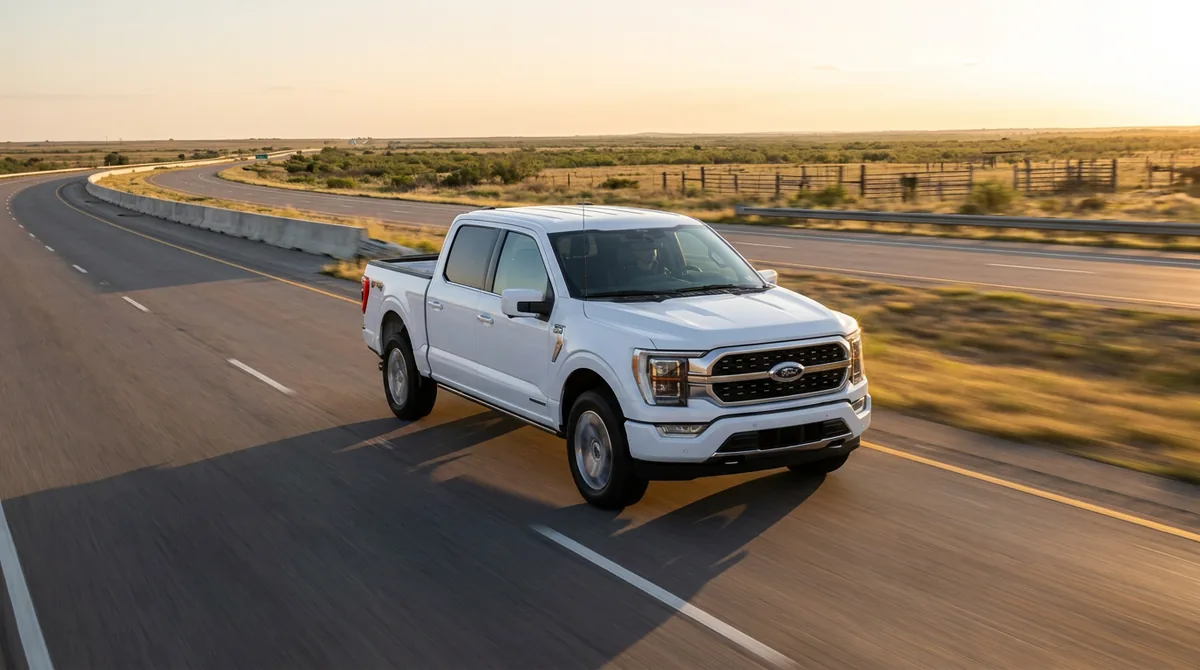
Most households here commute out — I-45, the Beltway, 288. More highway miles at speed means more severe claims when they happen. Our neighbors down I-45 face the same math, as our League City car insurance guide shows.
Weather losses
Hail and floodwater total vehicles in this region on a scale that surprises people moving in from elsewhere. All of it is a comprehensive claim.
Two counties
Friendswood straddles the Harris/Galveston county line, and rating territories don't always follow the boundaries you'd expect.
Uninsured drivers
Texas is an at-fault state. When the other driver has nothing, the coverage that saves you is one you bought for yourself.
None of that means Friendswood is expensive to insure. It means the shape of a good policy here is a little different — more weight on comprehensive and on uninsured motorist coverage, less on shaving the liability limits to hit a number.
The commute factor — FM 518, I-45, and how far you actually drive
The short answer: Annual mileage and commute distance are rating variables, carriers weight them very differently, and most people's numbers are out of date.
Friendswood is a commuter town. Some households run FM 518 to I-45 and north into Houston. Some go east toward the Clear Lake and NASA corridor. Some barely leave town. Those are materially different risk profiles, and they're one of the few rating variables you can actually document in your favor.
Here's where money gets left on the table: most people's mileage figure was set when they bought the policy and never revisited. If your commute changed — a new job, a move, hybrid work, a retirement — your policy may still be rated on a drive you no longer make. That's a phone call, not a claim.
Three related things worth checking on a Friendswood policy:
- Who's actually driving what. Households with two cars and different commutes are often rated as though both make the long drive.
- Whether telematics helps you. Genuinely low-mileage drivers frequently do well with usage-based programs. Heavy highway commuters often don't — and carriers differ enormously in how their programs score things like hard braking in stop-and-go traffic.
- Student drivers away at school. If a teen is at college without the car, that's a rating change most families never report.
None of these reduce your coverage. They just make the rating match reality, which is the cheapest kind of saving there is.
Why comprehensive is the coverage that matters most here
The short answer: Because in this part of Texas, more cars are destroyed sitting still than in collisions — and comprehensive is entirely optional under state law.
This is the single most important paragraph on the page for a local driver. Texas law requires liability only. Collision and comprehensive are optional, so it is perfectly legal — and unfortunately common — to carry a policy that pays nothing when hail destroys your car in the driveway.
Comprehensive is what covers:
- Hail damage. A single storm can dimple every panel on a car and crack the windshield. Regional hail events produce enormous numbers of auto claims at once.
- Flooding. A flooded vehicle is an auto claim, not a home or flood claim. In a city where Harvey inundated more than 3,000 homes, plenty of those driveways had cars in them.
- Falling trees, storm debris, theft, fire, and a deer on a dark road.
If your car is financed or leased, this isn't a choice: your lender requires both collision and comprehensive as a matter of contract. Our hurricane guide covers which policy pays for what when a storm hits everything at once.
The carriers we shop for Friendswood drivers
The short answer: Geico, Progressive, Liberty Mutual and Safeco — quoted at identical limits so the comparison means something.
We don't publish sample premiums here, and we want to be direct about why. There's no honest way to show what "a Friendswood driver" pays — the spread between a 45-year-old with a clean record and a household with a newly licensed teenager is enormous, and a made-up average would mislead more than it helps. Anyone showing you a precise local figure without your details either made it up or is describing somebody else.
What we can tell you is what genuinely separates these carriers, which is more useful anyway.
Which carrier tends to fit which driver
The short answer: Carriers specialize. The one that's sharpest for a clean-record commuter is frequently not the one that handles a teen driver or a blemished record well.
| If this is your household | What decides the winner |
|---|---|
| Clean records, two commuters | Carriers cluster tightly here, so the differences are modest and often come down to bundling and discount stacking. This is the profile where re-shopping at renewal matters more than carrier choice. |
| Newly licensed teen driver | The widest spread in personal insurance. The same teenager can cost dramatically different amounts across carriers, and good-student and driver-training credits are applied inconsistently. Worth shopping every single option. |
| A ticket, at-fault accident or lapse | Appetite differences dominate. One carrier surcharges heavily, another barely registers it. This is where being independent stops being a nicety. |
| Older paid-off vehicles | The decision is less about carrier and more about whether to keep physical damage coverage at all — with hail exposure weighing heavily against dropping comprehensive. |
| High-value or specialty vehicles | Agreed-value and specialty forms matter more than the headline rate. Standard auto pricing is the wrong lens. |
| Bundling with a Friendswood home | Sometimes wins outright. On the Galveston County side of town the wind policy usually can't be bundled, so the discount covers less of your total than the advertising suggests. See our Friendswood home insurance guide for that side. |
The pattern underneath all of that: the more unusual your situation, the more shopping is worth. Clean-record households find a tight cluster of prices. Households with a teenager, a violation, or an unusual vehicle find a wide spread — and that spread is exactly where an independent agency earns its keep.
Our bundling guide runs the honest math on pairing this with your home policy.
Why we won't sell you the state minimum
The short answer: 30/60/25 hasn't moved since January 1, 2011, and the gap between it and genuinely protective limits is usually far smaller than people expect.
Texas requires 30/60/25 under Transportation Code §601.072: $30,000 per injured person, $60,000 per accident, $25,000 for property damage. That floor took effect January 1, 2011 and hasn't changed since — while the cost of repairing a vehicle and treating an injury has.
The Legislature seems to agree. Two bills in the 2025 regular session — SB 1674 and HB 4178 — proposed raising the minimums to 50/100/40 effective January 1, 2026. Both died when the session ended on June 2, 2025. An earlier attempt in 2023 also failed. When lawmakers repeatedly try to raise a floor and repeatedly fail, that tells you something about the floor.
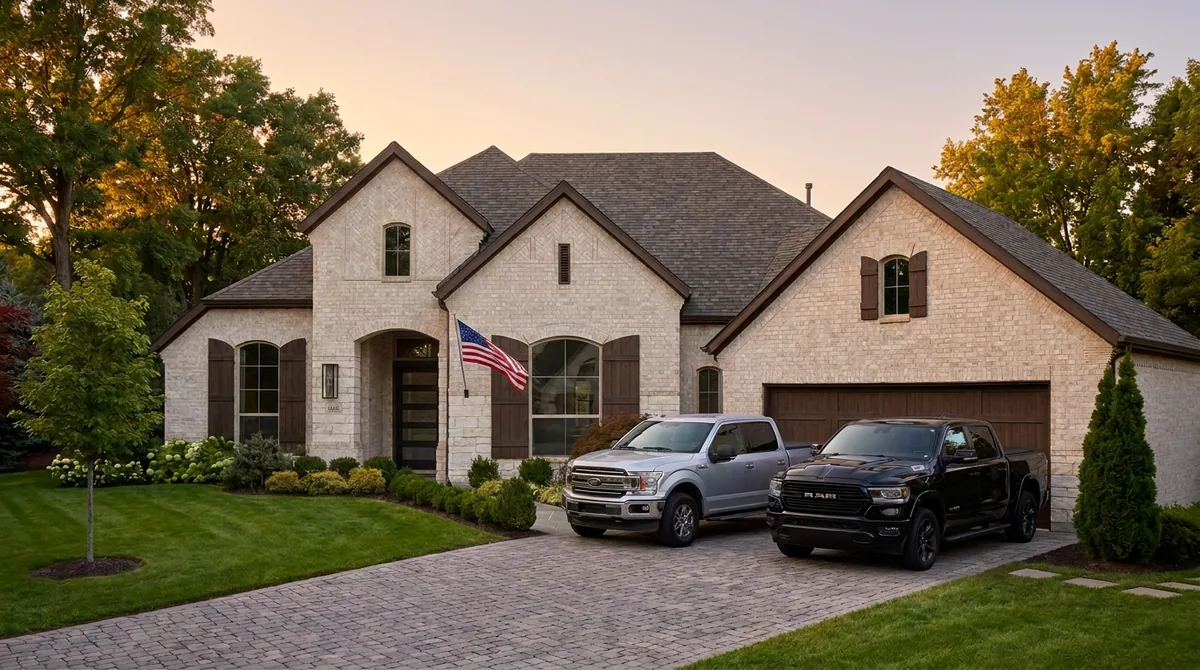
Put $25,000 of property damage against a current-model pickup on I-45. Anything above your limits doesn't disappear — the other party can pursue you personally for it.
And check whether you still have UM/UIM
Under Texas Insurance Code §1952.101, insurers must provide uninsured and underinsured motorist coverage unless you rejected it in writing — and §1952.101(c) means that rejection stays in force through every renewal until you request the coverage back in writing. Plenty of drivers signed that form years ago and have no memory of it.
In an at-fault state with a 30/60/25 minimum, the underinsured driver isn't an edge case — the law practically manufactures one. Our Texas auto insurance guide covers this in full.
Honest ways to pay less
The short answer: Re-shop, fix your mileage, claim your discounts, and set deductibles you could actually cover. None of those reduce your protection.
Re-shop at renewal
When we re-shop coverage, clients save on average about $500 a year — same driver, same limits, different carrier. An average, not a promise.
Correct your mileage
If your commute changed, your rating may not know. One of the few adjustments that costs nothing and reduces no coverage.
Claim your discounts
Good student, multi-vehicle, paid-in-full, paperless, affiliation. Most drivers qualify for several and use two.
Raise the deductible
Real savings — but only to a number you could write a check for tomorrow. A deductible you can't cover is a gap with a friendly name.
And the four we won't do to make a quote look better: drop you to state minimums, strip UM/UIM, reject PIP, or cut comprehensive off a financed or hail-exposed vehicle. Those don't reduce what you pay so much as what you have. The full savings guide works through the rest.
The bottom line
There's no single best car insurance company in Friendswood, and we'd rather say that plainly than pretend otherwise. What's true is that the winner depends on your record, your commute, your vehicles and whether there's a teenager on the policy — and that the spread between carriers widens exactly when your situation is unusual.
What we'd push you on locally is coverage shape rather than carrier. Keep comprehensive on anything that parks outside, because hail and floodwater total more cars here than collisions do. Check that nobody signed away your UM/UIM. And don't let a quote engine talk you down to 30/60/25 on a highway commute.
We shop Geico, Progressive, Liberty Mutual and Safeco, quote them at identical limits, and tell you which one actually wins for your household. We can't shop every carrier in Texas and won't say we can — but one conversation covers a lot more ground than one company's renewal letter.
We're at 2 Parkside Drive, Suite 109, and we drive the same roads you do. Send us your declarations page — (832) 703-1289.
Last reviewed by the Watson Insurance team on August 24, 2026. Carrier appointments, appetite and pricing change constantly and are re-verified before every quote; this page is refreshed quarterly. Educational only — not personalized insurance advice.