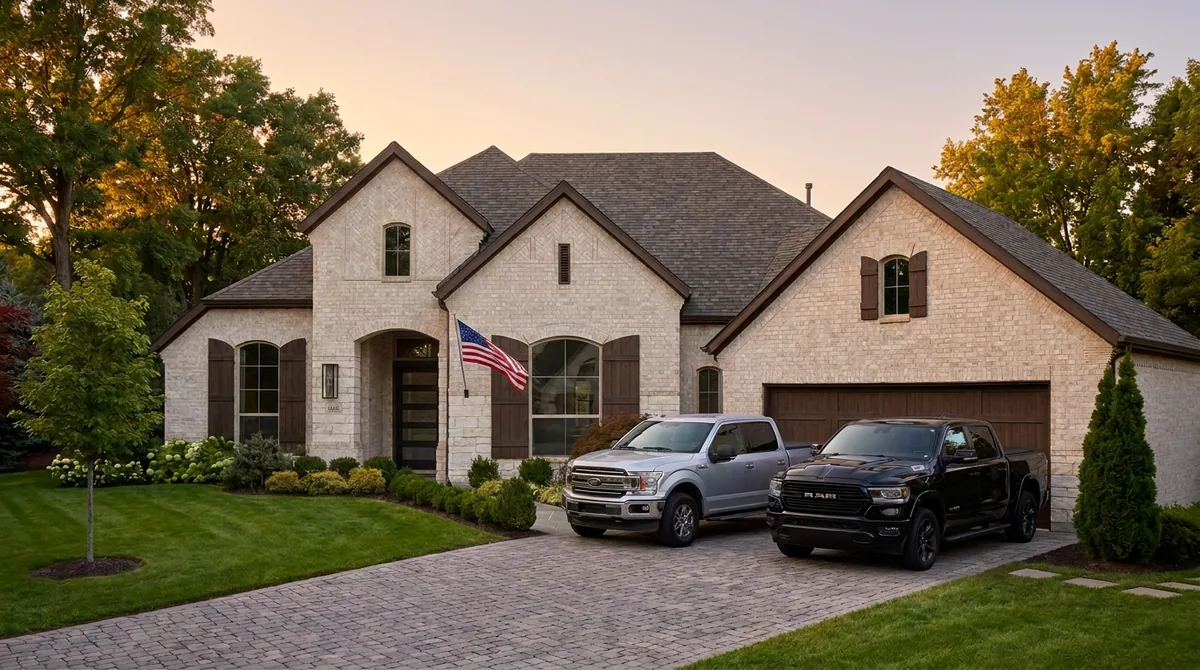
Somewhere around a roof's fifteenth birthday, Texas home insurance changes character. Renewals arrive with new endorsements. Quotes that used to take minutes come back "unable to offer at this time." A company you've paid for a decade suddenly wants an inspection, or a re-roof commitment, or simply wants out. Homeowners experience it as personal; it isn't. It's arithmetic.
In the state where wind and hail are 62% of claim dollars, an aging roof is the single most predictable loss in the book — and the market has spent the past several years repricing, re-terming, and sometimes declining exactly that. The good news buried in the arithmetic: carriers disagree with each other about where the lines sit, which means an old roof is a shopping problem, not a sentence.
This page is the field guide: why the gate exists, what "yes with conditions" actually looks like, the options ladder from best case to floor, the re-roof decision run as math instead of dread, and how to squeeze the most insurable life out of the roof you have.
Why roof age is the gate
The short answer: An aging shingle roof in the hail belt is a claim with a due date. Carriers price what they can, re-term what they can't, and decline the rest — each drawing the lines differently.
Underwriting an older roof in Texas means underwriting three converging facts. Shingles degrade — losing granules, flexibility and impact resistance — so the same hailstorm that bounces off a five-year-old roof totals a twenty-year-old one. Hail keeps coming: Texas leads the nation in major hail events, and the exposure repeats annually. And a roof near end-of-life creates the moral-hazard problem that reshaped the whole market: replacement-cost coverage on nearly-spent shingles converts insurance into a prepaid roof plan, which is unpriceable — the mechanism our ACV guide unpacks in full.
So carriers gate. The specifics are proprietary and they move — age thresholds (commonly in the 15–20 year zone for shingle, later for metal and tile), inspection triggers, material rules, condition standards — but the structure is universal: under the threshold, normal market; past it, conditions or declination. Two things follow that work in your favor. The gates are per-carrier, so the market's answer for your roof is plural — one company's hard stop is another's standard business. And the gates reopened as the market flattened: appetites that slammed shut in the 2022–2024 spike years have been loosening since, which means a roof that couldn't find offers in 2023 may find several today. If your information about your options is spike-vintage, it's stale.
What "yes" actually looks like on an older roof
The short answer: Coverage with re-terms: ACV or a schedule on the roof, sometimes a cosmetic exclusion, a bigger wind deductible, or an inspection first. Each is readable in advance — and each is a lever, not just a sentence.
When a carrier offers on a 15-plus roof, the offer typically carries one or more of these:
A re-valued roof. Actual cash value settlement or a payment schedule — the policy pays the roof's depreciated worth, not a new roof. This is the big one: on a heavily depreciated roof, it can reduce a five-figure hail claim to a small check, and the worked math should be read before signing, not after filing. Ask one question of every such offer: is an RCV buy-back endorsement available, and at what price? Sometimes it's surprisingly affordable; sometimes its price is the carrier telling you what it really thinks of the roof.
A cosmetic-damage exclusion. Hail marring that doesn't compromise function: declined. Most consequential on metal roofs, where dents are the common claim.
A bigger wind/hail deductible. Some carriers write older roofs but at 2% minimum where 1% was standard — thousands of dollars of difference, compounding with the settlement terms above.
An inspection or condition requirement. Photos or a physical inspection before binding, occasionally repair conditions (a few slipped shingles, exposed decking) as the price of standard terms. Annoying, and genuinely useful: a passed inspection is documentation in your favor.
None of these makes an offer bad — a re-termed policy from a solid carrier usually beats both the FAIR Plan and going bare, and sometimes beats an RCV policy priced for a roof the carrier doesn't trust. What makes an offer bad is not knowing which of these it carries. Every one of them is visible on the quote documents; matching them across offers is exactly the coverage-first comparison we run.
Your options ladder, best case to floor
The short answer: Shop the appetite spread first; take re-terms consciously second; adjust structure third; use the FAIR Plan as the bridge-of-last-resort while you cure the roof — never as the destination.
Shop the appetite spread
Because carriers draw the age line differently, the first move is simply asking more of them — through the independent channel, one request covers several, with the captives a separate errand each. On old roofs specifically, the spread between "declined" and "standard terms" across companies is the widest in home insurance. This rung alone re-houses most older roofs.
Take re-terms with the math done
If every offer carries a schedule or ACV, choose the best of them consciously: compare the tables, price any RCV buy-back, and treat the depreciation gap as retained risk you're being paid (in premium savings) to hold. As bridge coverage to a planned re-roof, this is a legitimate, often optimal structure.
Adjust the structure
Where premium is the obstacle rather than availability: a deliberately higher wind deductible you've funded, or trimming optional endorsements — never the dwelling limit — can keep a voluntary-market policy affordable. Structure is negotiable; adequacy isn't.
The FAIR Plan — as a bridge
If the voluntary market genuinely declines across the board, the Texas FAIR Plan (agent-submitted, basic coverage, deliberate pricing) holds the fort. Treat it as scaffolding: it exists to keep you covered while you cure the declinable feature — which, for this page's readers, is the roof. Our non-renewal guide covers the residual market mechanics in full.
One rung that isn't on the ladder: going bare. Beyond the mortgage problem (lenders force-place expensive coverage into the gap), an uninsured year on an old roof is a bet that the hail belt takes personally. Every rung above — including the floor — beats it.
The re-roof decision: run it as math
The short answer: Compare what the old roof costs you per year — premium penalty plus retained depreciation risk — against the re-roof's price. The insurance side pays back more of it than most homeowners expect.
At some age, the question inverts from "how do I insure this roof" to "is this roof worth insuring." Run it honestly:
What the old roof costs annually: the premium difference between your re-termed policy and what the same house quotes with a new roof (we'll pull both numbers — the gap is often substantial); plus the retained risk — your worst-case depreciation gap from the ACV math, times a hail-belt storm's realistic odds; plus the aggravation tax of inspections, conditional renewals and shrinking options as the roof ages further.
What the re-roof buys back: replacement-cost eligibility restored; carriers that had declined you back in the auction (more bidders, better price — the availability effect our cheapest-home guide calls the re-shop moment); and, if you spend up for impact-resistant class 4 shingles, dedicated premium credits at many carriers that compound every year after — an upgrade TDI itself encourages. On hail-belt homes, the insurance-side payback of the class 4 delta is frequently measured in a few years, not decades.
Timing notes. If a storm damages the roof first, the claim funds part of the transition — settle it properly (at your policy's basis, with recoverable depreciation chased if you have it), then upgrade at replacement. And never time a re-roof around a hoped-for storm; insuring honestly means the roof's age is what it is on every application. The clean sequence: re-roof, document completion, notify the insurer, re-shop the same month. The homeowners who collect everything a new roof earns are simply the ones who do the last two steps.
Extending your roof's insurable life
The short answer: Documentation, small repairs done promptly, and cooperative inspections keep an aging roof in the voluntary market longer — and win the arguments if a claim comes.
Between "new" and "replace," there's a long middle where management matters:
Build the roof file. Installation invoice with date and material, every repair receipt, and dated ground-level photos each spring and after major storms. At underwriting, a documented 14-year-old roof in maintained condition reads very differently from "roof age: unknown"; at claim time, pre-storm photos are the cheapest dispute-ender in insurance — they establish what condition the storm found, which is the entire argument in a wear-versus-damage adjustment.
Fix small things fast, on the record. Slipped shingles, minor flashing gaps, a lifted ridge cap: repaired promptly (with receipts), they're maintenance. Left visible, they're underwriting findings — and unrepaired conditions are among the roof issues that can drive a non-renewal, where Texas law requires 60 days' notice but not mercy.
Cooperate with inspections. Carriers increasingly photograph and inspect, at new business and sometimes mid-term. Treat it as a free condition report: pass, and you've got documentation; get findings, and you've got a short repair list that keeps the policy — cheaper than re-entering the market with an inspection failure on record.
Skip the below-deductible claims. On a scheduled or ACV roof especially, a modest hail claim may pay little or nothing after depreciation and deductible — and still enter your claims history, aging your profile in the eyes of every future underwriter. Get your own estimate first; file when the math says file. (Borderline? That's a phone call we take daily.)
The honest path for your roof, this year
The short answer: Know your terms, run the appetite check, choose your rung consciously — and put the re-roof on a planned date instead of the storm's schedule.
Compressed to a checklist:
1. Read what you have. Settlement basis, wind deductible in dollars, exclusions — the three lines that decide your next claim. (Send the dec page; we'll translate, free.)
2. Run the appetite check. One request to us covers our lineup at matched terms — who offers on your roof's age, on what basis, at what price — and we'll say plainly if a captive errand or the FAIR Plan is worth your time this year. Because appetites reopened as the market flattened, this answer has probably improved since you last asked.
3. Choose your rung on purpose. Best available voluntary offer, re-terms with the math done, structure adjusted — whatever it is, it should be a decision with numbers attached, not a renewal filed unread.
4. Date the re-roof. Even if it's three years out, a planned replacement converts everything above from anxiety into bridge strategy — and puts the class 4 upgrade, the carrier reopening and the re-shop on your calendar instead of the weather's.
An old roof narrows your insurance options; it doesn't eliminate them, and it rewards exactly the kind of deliberate shopping most homeowners never do. That's the whole trade. We'll do the legwork side of it any week you're ready — (832) 703-1289, or the ZIP box below.
Last reviewed by the Watson Insurance team on September 2, 2026. Carrier appetite for roof ages changes constantly and is re-verified before every quote; figures are from TDI as of this date. This page is refreshed quarterly. Educational only — not personalized insurance advice.